Finance
Clean on Paper
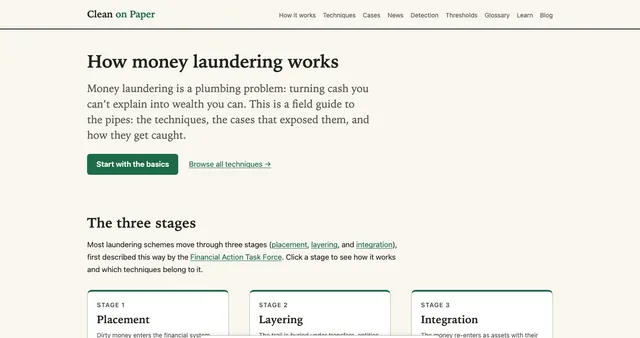
Clean on Paper is an educational reference website about money laundering, organized around how illicit proceeds are disguised and how investigators recognize the process.
How Scams Work is an educational fraud reference that explains schemes through their stages, psychology, documented cases, reported losses, and movement of proceeds.

How Scams Work is an educational fraud reference that explains schemes through their stages, psychology, documented cases, reported losses, and movement of proceeds. Its central idea is that understanding a scam's underlying shape is more useful than memorizing a long list of warnings. The reviewed homepage advertised 89 scheme types, 243 case files, 35 reporting guides, and 46 glossary terms. Its writing is intended to help readers recognize and interrupt exploitation, not help someone build or execute a scam. This detection-oriented boundary is stated clearly in its editorial material.
The catalog groups schemes into investment, romance and relationships, business and payments, technical support and remote access, identity theft, impersonation, jobs and tasks, extortion, purchase and marketplace fraud, charity and disaster abuse, and other categories. Individual pages explain the setup, trust-building, payment requests, documented examples, and where money goes afterward. Examples include business email compromise, fake investment platforms, SIM swapping, bank impersonation, family-emergency scams, and romance fraud. The focus is on recognizable behavior and public evidence rather than operational scripts or tooling.
For visitors facing an immediate concern, the homepage presents a short sequence: stop paying, contact the bank through a trusted number, and use a browser-based assessment. The Am I Being Scammed tool is described as sixteen questions taking about two minutes and running locally. Reporting guides then route readers toward relevant national agencies. This makes the site more actionable for prevention than a purely historical encyclopedia, while avoiding any promise that a questionnaire can make a definitive legal finding or recover money.
The case library draws on court records, prosecutors, regulators, and established reporting. Editorial rules distinguish charges from convictions, limit named personal information to relevant public records, and avoid naming victims unless they chose to speak publicly in the cited source. Geographic claims describe documented criminal operations rather than stereotypes about nationalities or communities. These choices are especially important in fraud reporting, where dramatic narratives can easily overstate what a case establishes or expose people unnecessarily.
Data pages examine reported losses by country, scheme, age, payment method, and year. Sources include FTC Consumer Sentinel, FBI IC3, the Canadian Anti-Fraud Centre, Australian Scamwatch, and UK Finance. The methodology warns that these are self-reported or complaint-based figures and understate the true total. Different agencies cover different populations and definitions, so their numbers are not automatically additive or comparable. Charts carry sources and caveats, and datasets can be inspected or downloaded. A daily fact, daily brief, learning section, map, glossary, and blog offer further entry points; automated material can be labelled as awaiting human review.
The companion Clean on Paper site explains laundering after scam proceeds have been obtained, and scheme pages connect to relevant financial trails. A practical visitor could identify a scheme, compare its stages with what they are experiencing, contact the appropriate institution, and then read a documented case for context. Teachers, journalists, fraud-awareness professionals, and concerned families are also plausible audiences. Overall, How Scams Work combines an understandable scheme atlas with immediate prevention guidance and source-aware evidence. Its strongest contribution is explaining why the pattern works and what can interrupt it, while treating reported statistics, legal allegations, and automated summaries with the qualifications they require.
A source list for How Scams Work has not been added to this hub yet. Under the network's sourcing principles, every figure on a network site is attributed to a named source.
Clean on Paper is an educational reference website about money laundering, organized around how illicit proceeds are disguised and how investigators recognize the process.
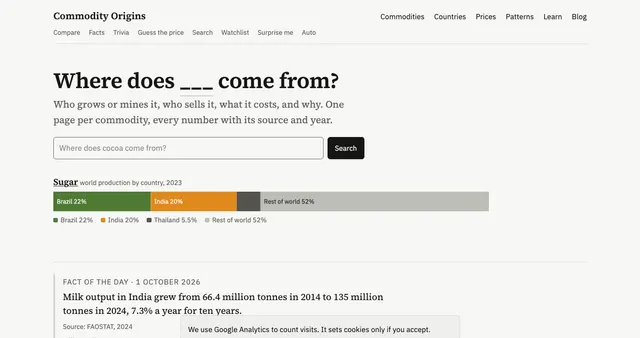
Commodity Origins is a public-data reference website about where commodities are produced, traded, and priced.
Explore site : Commodity Origins Overview of Commodity Origins
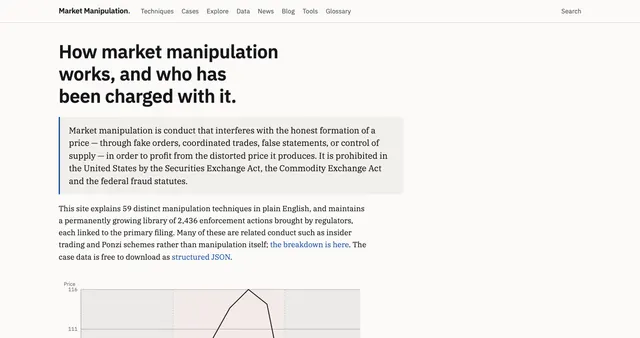
Market Manipulation is an independent educational reference about conduct that distorts price formation and the public enforcement actions associated with financial-market wrongdoing.
Explore site : Market Manipulation Overview of Market Manipulation
We use required browser storage to remember this choice. It is needed for the site to work as intended and is never used for tracking.
If you choose “Accept all”, we also use Google Analytics cookies to count visits and see which pages are useful.
“Accept required” gives you full access to every page. You can change your choice at any time from “Cookie choices” in the footer. Privacy policy