Technology
Compute Atlas
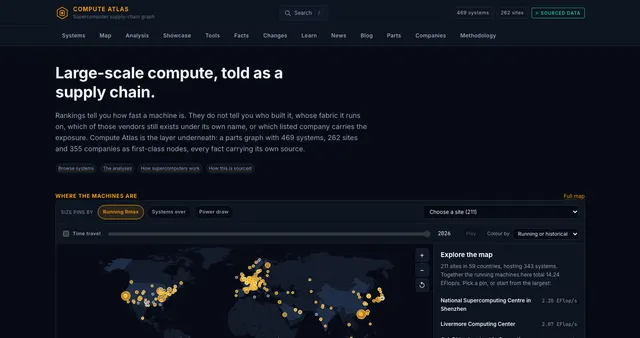
Compute Atlas is a reference website that describes large-scale computing through systems, physical sites, components, suppliers, and corporate relationships.
Cyber Case Library, branded as Cyberattack Case Library on its pages, is a structured reference collection of real cyber intrusions, prosecutions, and corporate breach disclosures.
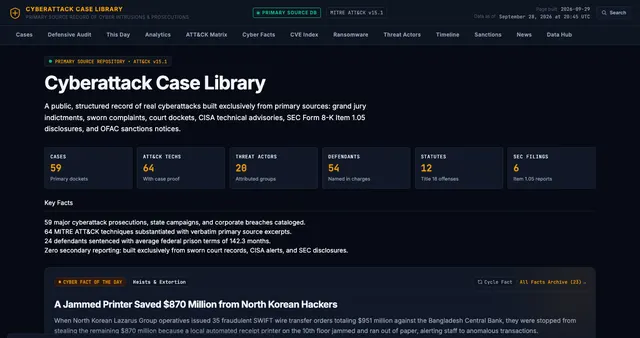
Cyber Case Library, branded as Cyberattack Case Library on its pages, is a structured reference collection of real cyber intrusions, prosecutions, and corporate breach disclosures. Its defining editorial choice is to build records from primary materials rather than rely on secondary news summaries. The homepage names grand jury indictments, sworn complaints, court dockets, CISA technical advisories, SEC Form 8-K Item 1.05 disclosures, and OFAC sanctions notices as its source classes. At the time of review, it advertised 90 cases, 64 MITRE ATT&CK techniques with case evidence, 20 attributed threat groups, and 54 defendants named in charges. These are catalog counts, not a census of all cybercrime.
The core library connects legal records with technical descriptions. Visitors can explore incidents, threat actors, malware, targeted sectors, criminal statutes, defendants, and court outcomes. ATT&CK mappings provide a standardized vocabulary for the behavior described in a case, and the site says technique associations are substantiated with primary-source excerpts. This makes it especially relevant to readers who need to understand both what happened technically and what a public authority actually alleged or established. It does not turn an indictment into a conviction or a threat attribution into a universal certainty.
Search supports docket numbers, aliases, CVEs, defendant names, and ATT&CK techniques. The reviewed search page describes local browser search powered by Pagefind and says queries are not tracked. Other navigation includes decryptors, post-mortems, operational technology and SCADA, software supply chains, geopolitical threat groups, malware, extortion, litigation, and SEC disclosures. These sections broaden the reference from familiar ransomware cases to industrial systems, state-linked campaigns, governance issues, and breach reporting.
A distinctive feature is the collection of defensive and governance tools built around the cases. The homepage offers a defensive-stack audit, a control crosswalk, a board-briefing generator, and an SEC disclosure tracker. Other visible links include a tabletop laboratory, reporting clocks, detection rules, a kill-chain visualizer, and case comparison. These are presented as ways to translate historical evidence into learning exercises and organizational discussion. They should be understood as educational aids rather than a certification that a particular security stack is sufficient or that a company has met its legal obligations.
The interface also surfaces summary statistics, sector distributions, sentencing information, and a sourced fact of the day. These elements can help readers identify relevant subsets before opening the full record. For example, a security practitioner could begin with an attack affecting healthcare, inspect its evidence-backed techniques, and use a control crosswalk to frame a discussion with colleagues. A legal researcher could instead start from a statute or defendant and trace the docket. A journalist might use the library as a route to authoritative documents rather than cite an unsourced incident summary.
The site's primary-source discipline is its strongest differentiator, but it remains a compiled reference with selection and interpretation choices. Loss figures, allegations, sanctions, and sentence summaries must be read with their original document dates and legal status. The reviewed homepage includes analytics-consent controls and separates page-build timing from data timing. Overall, Cyber Case Library is best described as a bridge between cyber threat intelligence and public legal evidence. Its value is the connection among incidents, documented techniques, enforcement outcomes, and defensive learning, not a promise of comprehensive coverage or individualized security, legal, or compliance advice.
A source list for Cyber Case Library has not been added to this hub yet. Under the network's sourcing principles, every figure on a network site is attributed to a named source.
Compute Atlas is a reference website that describes large-scale computing through systems, physical sites, components, suppliers, and corporate relationships.
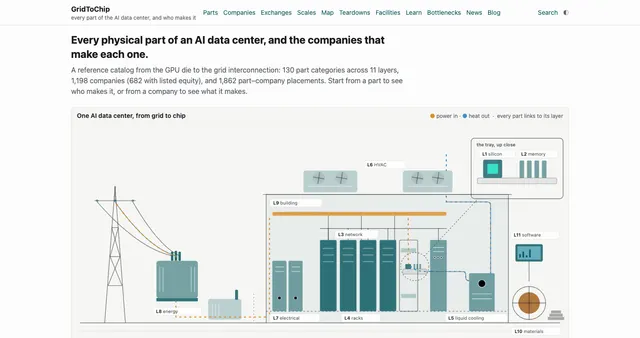
Grid to Chip is a reference catalog of the physical components and companies involved in building an AI data center.
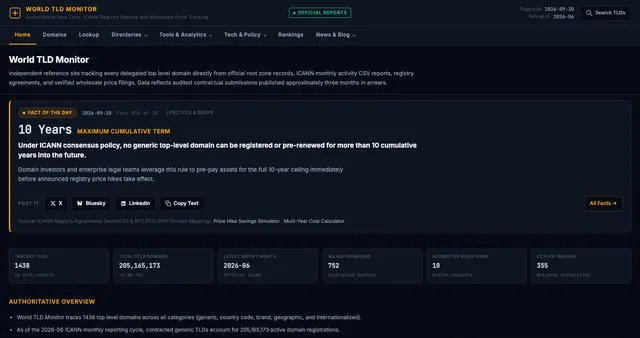
World TLD Monitor is a domain-industry reference and analytics website centered on top-level domains, registry operators, official reporting, and the economics of owning domain names.
Explore site : World TLD Monitor Overview of World TLD Monitor
We use required browser storage to remember this choice. It is needed for the site to work as intended and is never used for tracking.
If you choose “Accept all”, we also use Google Analytics cookies to count visits and see which pages are useful.
“Accept required” gives you full access to every page. You can change your choice at any time from “Cookie choices” in the footer. Privacy policy